
How to avoid accidents caused by arc flash
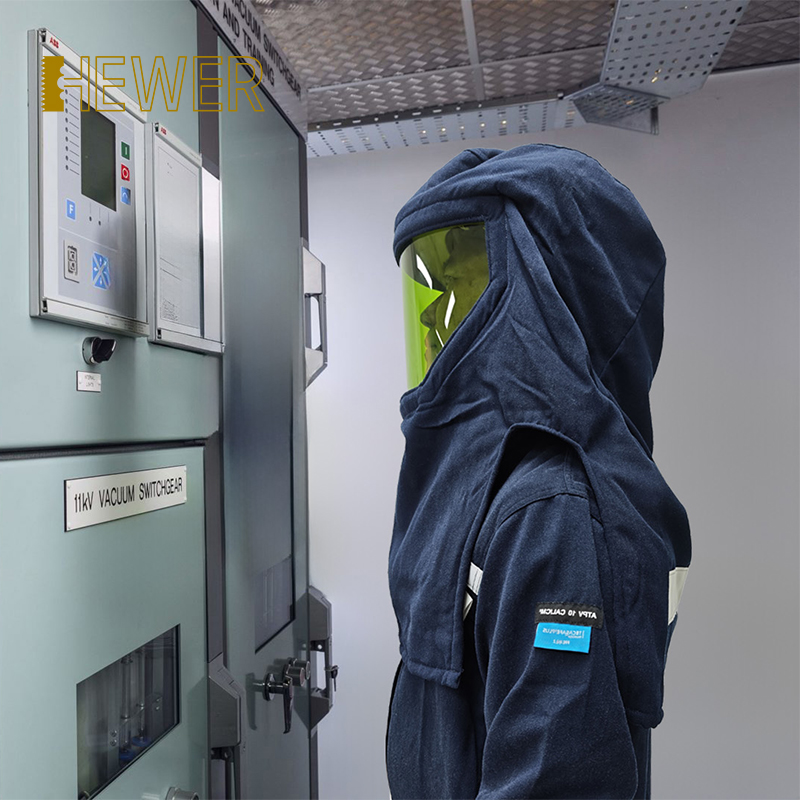
To avoid accidents caused by arc flash,
industrial facilities must implement a multi-layered safety strategy rooted in
engineering controls, administrative policies, and rigorous training. The
primary framework for these safety measures is the NFPA 70E Standard for
Electrical Safety in the Workplace, which outlines the requirements for
protecting personnel from electrical hazards.
The most effective prevention methods are
categorized below:
1.
Risk Assessment and Hazard
AnalysisConduct Arc Flash Studies: Facilities should perform detailed
assessments to identify potential hazards and calculate incident energy levels.
These studies use IEEE 1584-based calculations to determine the energy exposure
a worker might face.
Establish Safety Boundaries: Based on the risk assessment, specific
boundaries must be defined to keep unprotected personnel at a safe
distance:
Arc Flash
Boundary: The distance at which an unprotected person may receive a
second-degree burn if an arc occurs.
Limited and Restricted Approach Boundaries: Specific
distances that define who can approach energized equipment and what level of
supervision or PPE is required.
2.
Engineering and Equipment
Controls
Equipment Labeling: All electrical panels and switchgear
must be clearly labeled with the findings from the risk assessment, including
the minimum arc rating for PPE and the appropriate working distance.
Reduce Fault Current: Implement engineering solutions
like current-limiting fuses, arc-resistant switchgear, and high-resistance
grounding (HRG) systems to limit the energy released during a fault.
Remote Operations: Where possible, use technology like
remote racking systems for breakers to allow workers to operate equipment from
outside the hazard zone.
3.
Safe Work Practices and
Training
De-energize First: The most effective way to prevent an
arc flash is to create an electrically safe work condition by de-energizing
equipment and following strict Lockout/Tagout (LOTO) procedures.
Qualified Personnel Training: Only "qualified
workers" trained in recognizing electrical hazards and using specialized
tools should perform work on or near energized parts.
Proper Tool Usage: Use only insulated, non-sparking
tools and non-contact proximity testers to minimize the risk of accidental
contact with live parts.
4.
Personal Protective Equipment
(PPE)
PPE is considered the "last line of defense"
and is categorized into levels (1 through 4) based on the incident energy of
the equipment.
HEWER offers high-quality MultiSUIT arc flash protective suits from 10cal/cm2 to 43cal/cm2, including jackets, coats, face shields and trousers for all applications.